Search for:

The Highs and Lows of E3, part 1: the lows

Lows

Less-than impressive start by Ubisoft

Ubisoft spending its debut day re-hashing old games and discussing movies left an ashy taste on E3 viewers coming to this year’s video game trade event.

The companies actions left viewers feeling even more sour as many felt some of their lackluster interviews were trying to cover for Workplace Harassment scandals that saw news coverage in 2020.

Good for the Company, bad for the gamers

Xbox released tons of exclusives for its new device. While that is an excellent move company-wise (it lets the device compete with others on the market that also have exclusive games) it leaves most gamers behind. The latest Xbox goes for around $500, which is a significant chunk of change, and games for it go up to $80 as well, leaving those who love games but can’t shell out a minimum of almost $600 for a new console and a single game out of the loop.

Doing this also limits how many people can buy or even play the game, regardless of the people who are interested in doing so.

Morally and Ethically Dubious NFT Game aimed at kids

With Cryptocurrency on the rise, it’s no surprise that the latest kind (NFTs) are now being incorporated into videogames. For E3, Mythical Games launched an MMO dedicated to the creation and selling of NFTs, with minigames as a side.

The problem lies in both the game being aimed at children, and in the environmental impact of maintaining and mining any kind of bitcoin.

Most kids might not understand that the game requires actual money, or even the idea that they’re essentially selling artwork. Bitcoin is notorious for using up extreme amounts of electricity.
Larger than Light

from their site

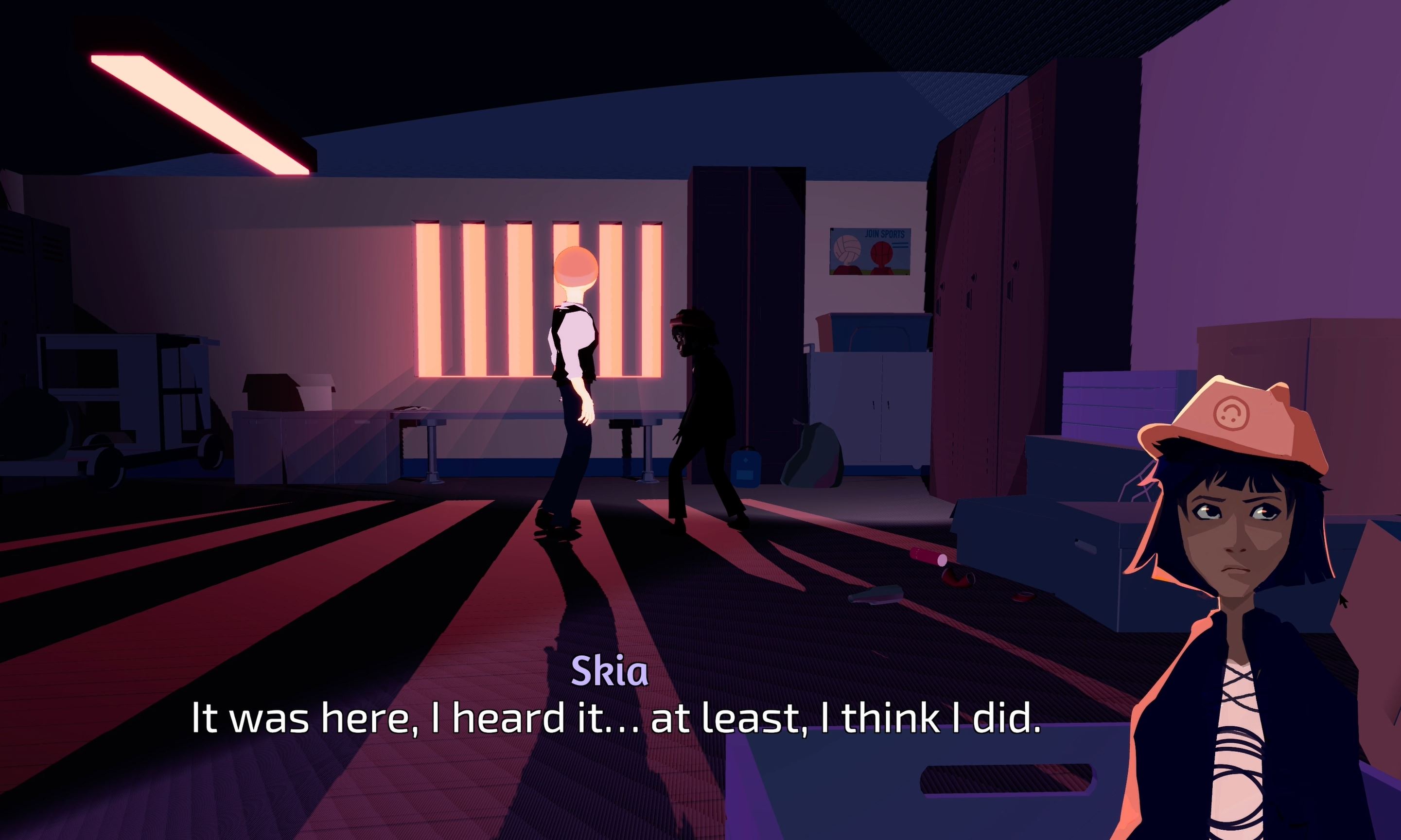
Larger than Light‘s gameplay takes full advantage of the medium its made for, with a playful style that’s a feat for the eyes.

The gentle pastels and harsh shadows don’t just look good: they’re used for gameplay! You maneuver Characters that represent both Shadow and Light source to traverse this puzzle-platformer.

You help the main characters Skia and Lux overcome their differences and bond as siblings as you adventure, and listen to their conversations as you go along. This game not only looks good, but also sounds good, with fully-voiced dialogue!

This game can also be found on steam, for the more than reasonable price of $4.99!

by Abby Zarakovich

Ninza

from Ninza site

Currently in free-to-play beta mode, Ninza is a combination platformer and brawler!!! From Indie developers Klakmioch, this game has a homepage, twitter and discord.

I tried it out, and while I’m not much of a brawler -or platformer- it’s a lot of fun! I love the characters, and the actual controls are pretty simple! The concept of the game itself is gret, too.

The main menu is easily traversable, and there are 4 game-modes available for play (for now at least). The game is relatively easy on the eyes, with minimal of the bright, flashy, effects that can hurt your eyes, and the animations are very readable. The backgrounds are done in a way that reminds me both of Japanese woodblock prints and those old-style story books done in paints and colored pencils.

If you have your eyes open for a brawler to play around with your pals, this one may be the one you want your mitts on.

By Abby Zarakovich

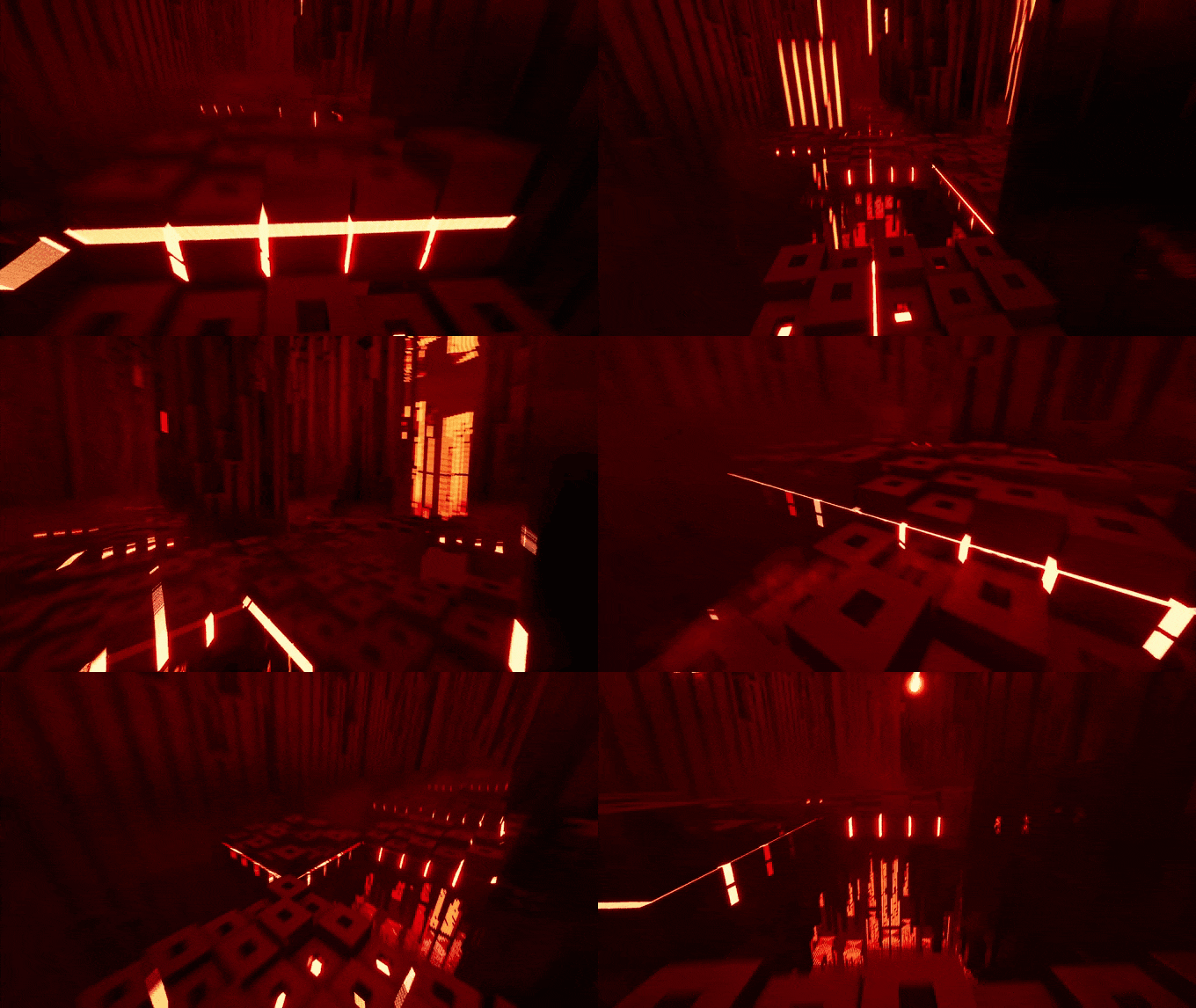
Dies Mortis

This is a game made by architecture students. I see it more of an art piece, for those times when people say that video games are an art- which this game really proves.

The Stages of death mark the stages seen in the game, rendered lovingly by first-time creators, by a team of 3 students from National Superior School of Architecture of Versailles. It’s a variation on 3-D platformers with stunning lighting an easy-to learn gameplay.

Even if the entire game runs for a mere hour, I believe that it will be an hour well spent.

Link to download here.

from their download page

by Abby Zarakovich

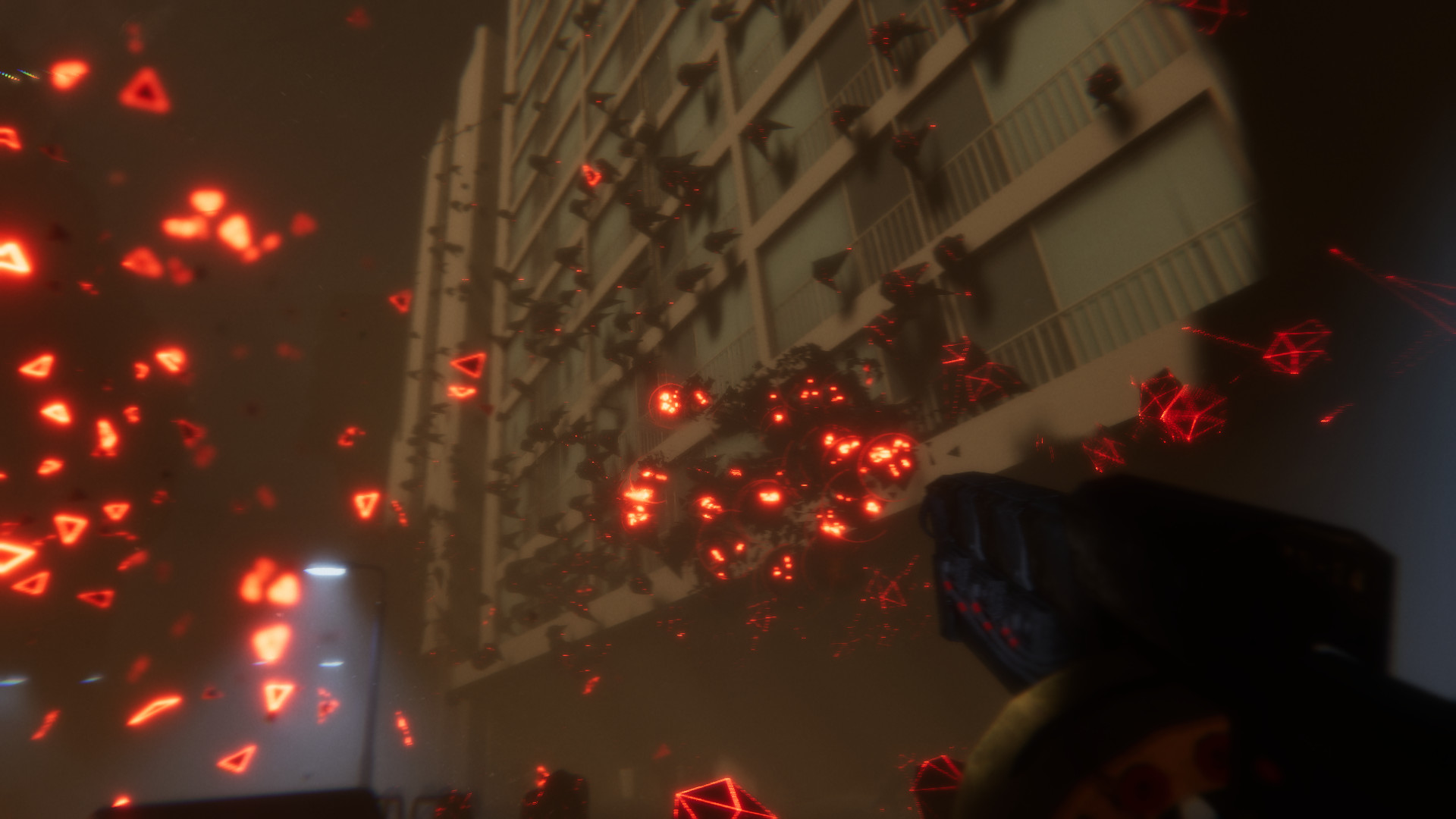
Just Read the Instructions (yes, that’s the name)

Bored of Games where all you do is shoot a bunch of zombies? Just read the Instructions adds in puzzles as you mow your way through waves of robo-like enemies!

Explore a surreal environment with your friends! This game is a co-op, and solving the set of instructions given to yuo allow you to access the next level.

This game is for those who want just a little something more in their classic shooters.

Both the environments and the monsters give you something interesting to look at as you brainstorm your path through the game.

Just read the Instructions is available to Beta, and is due to come out sometime in 2021 on Steam.

From their Steam page

by Abby Zarakovich

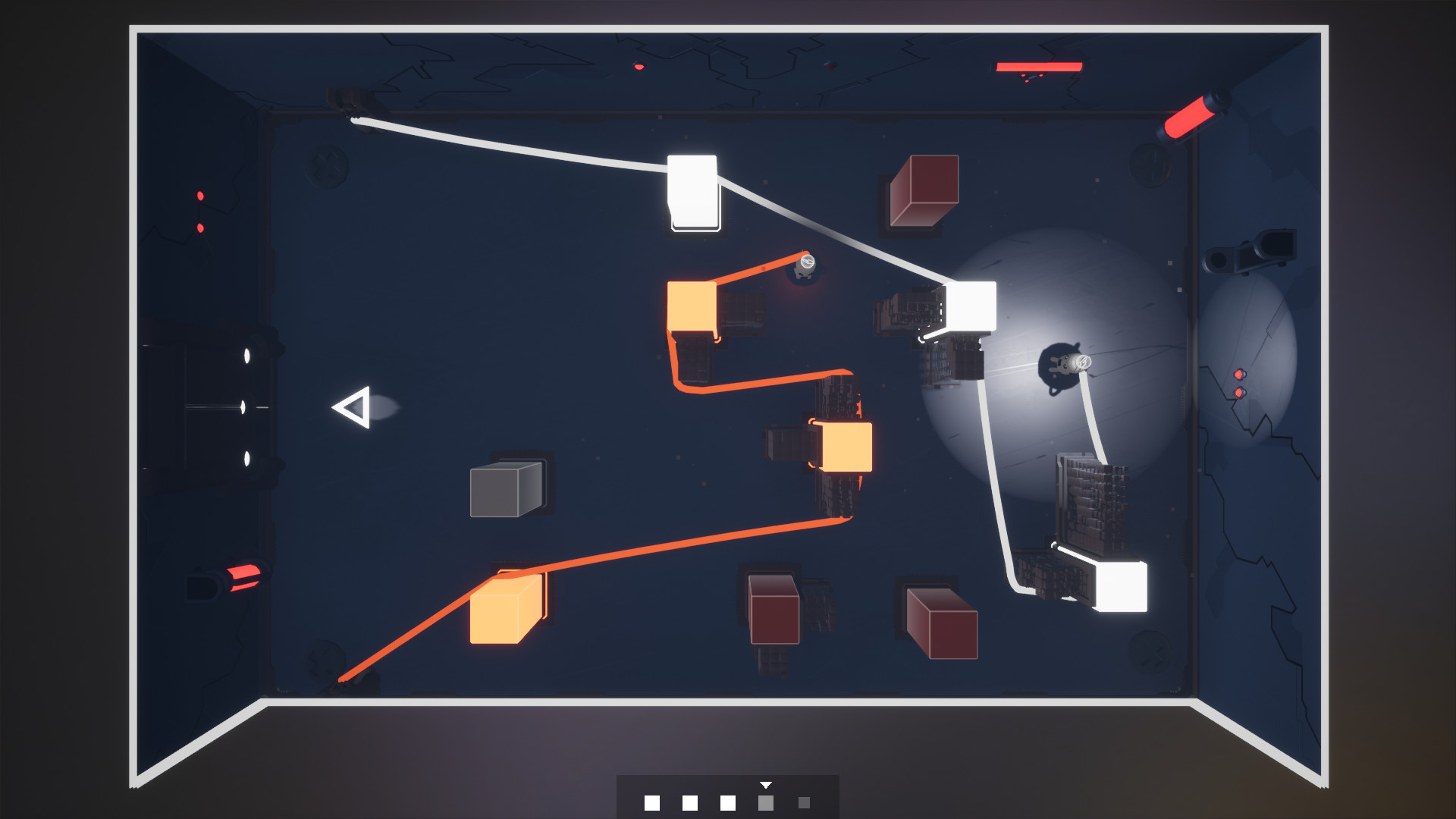
Filament

Filament (released back in April of 2020) is a sci-fi Puzzle game with a story thread running throughout.

In Filament, you explore the ship and its crew while solving delightfully colorful puzzles.

The game is known for its notorious difficulty, but even as those that review it flounder, they insist that the story and aesthetics make the game worth it.

Filament looks gentle on the eyes, the brightly colored (and titular) filament and the poles are high-contrast, and don’t get lost in the background.

from the Steam page

Two Strikes

Two strikes is a samurai-based fighting game, and technically a sequel game to the pixel-style One Strike!

This sequel uses masterfully done Black-and-White sprites in full-res on colorful, elegant backgrounds as parts of its showcase. There are currently 6 options for fighters, and it’s set to be released on the 31st of May on Steam.

Time to get Hackin’!

From the Dev’s facebook

by Abby Zarakovich

Chess variations II: Alternate rules and situations

Hostage Chess:

Any piece taken by you becomes your piece. You can then drop onto your side of the board in any free location, at any point in time.

Difficulty: Just above average chess; 5.5/10. The difficulty is now in placement and knowing gthe consequences of losing a piece.

Fun: 10/10!!! Rub salt in your enemies wounds by using what they lost. Adds an additional boost to eating and really reinforces the consequences of losing pieces.

Edits to be made: Have an extra set of pieces set aside for use.

Dark/Fog of War Chess:

Your opponent’s moves and pieces are not visible. Pawns, who’s movement may be blocked by a piece will be informed that a move forward is an illegal move- on this point some variety is seen on informing players, as some versions have an umpire who can decide on whether they announce what piece has moved or where it may be moved to.

Difficulty: Extreme: this style of game play requires knowledge of common moves and tactics. It works best for people who know how to play, and play well. 10/10.

Fun: If you like puzzle games and riddles, and deductive reasoning, this is the variation for you. If you love battleship, this is perfect.

Edits to be made: For an in-person game, this version would require 3 boards (you, opponent, 3rd party) and an umpire (to decide legality of moves).

Omega Chess:

Two pieces are added: The Wizard moves 1,3 or 3,1. It’s placed in the corners of the board, starting just off it. The Champion can either jump 2 diagonally, or move up to 2 horizontally or vertically, reminiscent of Chaturanga.

Difficulty: With a larger board and two new pieces, I feel the difficulty will be found in learning and adapting to the new pieces over anything else. 6/10.

Fun: Yeehaw WIZARDS!!!!!!! The names of the new pieces and the added gameplay gives this version a 7.5/10.

Edits to be made: 10×10 board, 4 additional pieces per side (2 wizards, 2 champions)

Cannibal Chess:

Difficulty: Definitely on the higher end: Remembering all the pieces that were eaten, and by whom, and doing so for your opponent as well is hard. A good way to train one’s memory!

Fun: Perfect opportunity for obnoxious munching noises during gameplay. 10/10.

Edits to be made: None to the board or pieces themselves. I would recommend marking the figures with some sort of symbol and then writing out which ate what on a sheet of paper.

by Abby Zarakovich

Vivid Knight

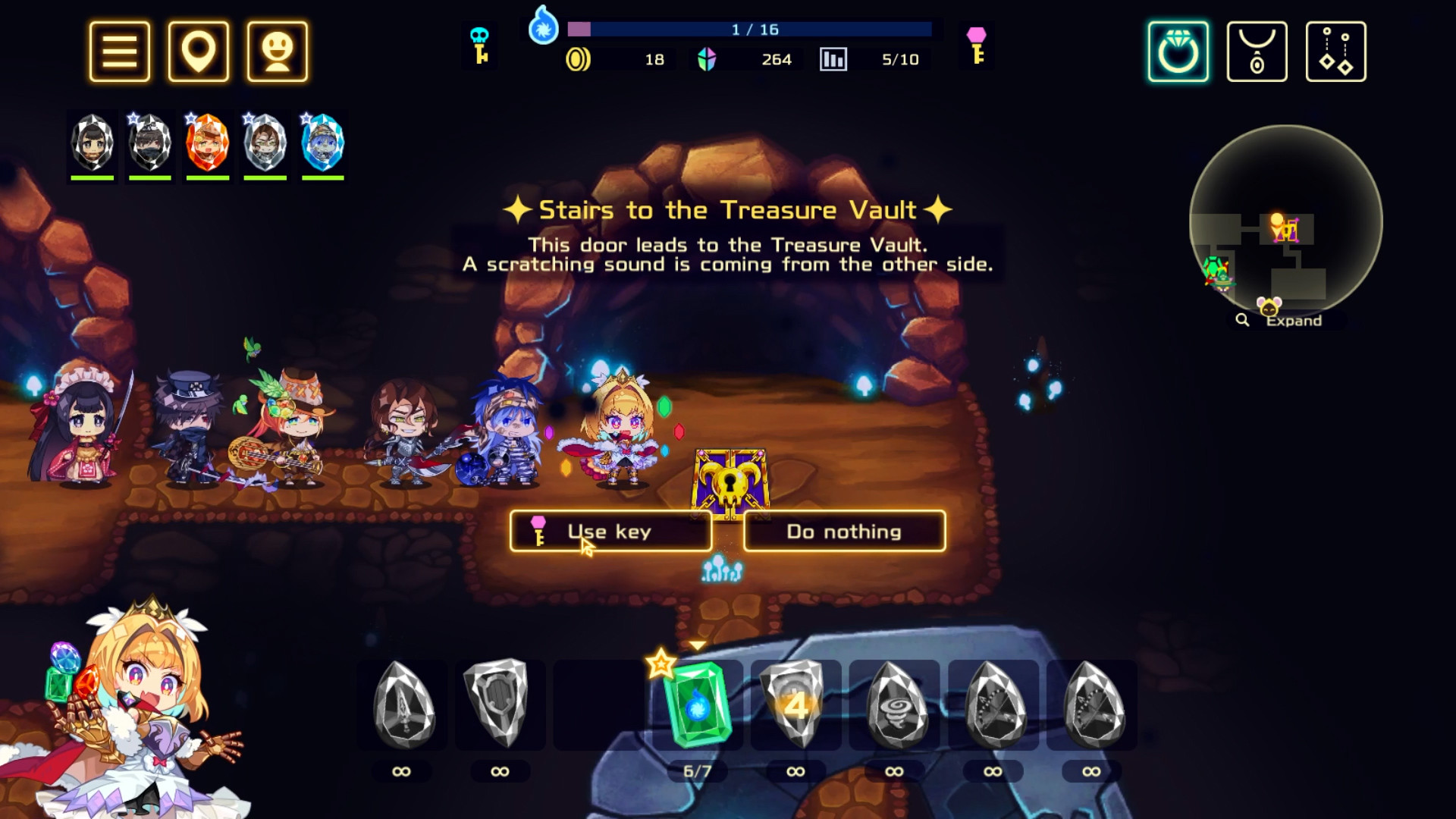
This Upcoming game on Steam has all the cuteness of a mobile game paired with the dungeon crawl adventures found in early MMOs.

Vivid Knight fits its name and reunites the modern gatcha with it’s fantasy-based ancestor (the MUD).

It’s character designs (varied and colorful as the name implies) works well with the graphics that accompany the randomly-generated dungeons that are the base of the game.

Mixing and matching the crystals that represent characters let you fight mobs and move through the dungeon, moving your party and the story along.

Vivid Knight’s building on the respected genre of dungeon crawler may revive the fun that nerds in ages past have enjoyed for themselves, and bring the 8-bit style of game into a new era.

Overall Aesthetic: The gems and art style are cute, with good color choices!

Gameplay: As someone who like randomized dungeons, this is one that drew my eye: I like how some rooms are optional, and if you don’t want to do something, a whole bunch of room types have option to not engage.

from the game’s Steam page

Kriegsspiel

Kriegsspiel is a highly accurate game of war, created by a Prussian general.

This game not only has its place in gaming history as the forerunner to modern games like Battlefield or Warhammer, but has also lead historians to the exact methods used during Prussian Warfare in the Napoleonic period.

Photo by Brett Bayley

The game is directed by a combination of strategy and dice, directing pieces representing all the parts of the army during the time period. In 1862 (years after it was released in 1824) there was an update to accommodate for improved weaponry and transportation, including both railroads and telegraphs.

The base of many modern games, the hit point (HP), can be seen here, in the “points” that each piece is worth. The number of points relates to the number of hits each unit can take before it gets destroyed.

The game requires real-life topographical maps (a scale of 1:8000), and the tactics used reflect real-life. The use of the map itself was a show of printing and map-making technology created in the era, and with it’s rules, was used by the Prussian army as a method to teach tactics.

The goal of the game is actually determined by an umpire. the umpire also interprets the written orders (moves) of the two armies (teams of players) and is the one to move the pieces. The size of the teams is recommended to be 4-6 players each.

This does give me memories of watching a few friends of mine play Warhammer. Cheerful, pre-Covid times at game club, with the swell of voices chatting over all kinds of games.

by Abby Zarakovich